Post-Holiday Organization with Great Day Connecticut: How To Make Space For New Gifts
Week 2 of our Post-Holiday Organizing Series, as seen on WFSB-TV’s Great Day Connecticut.
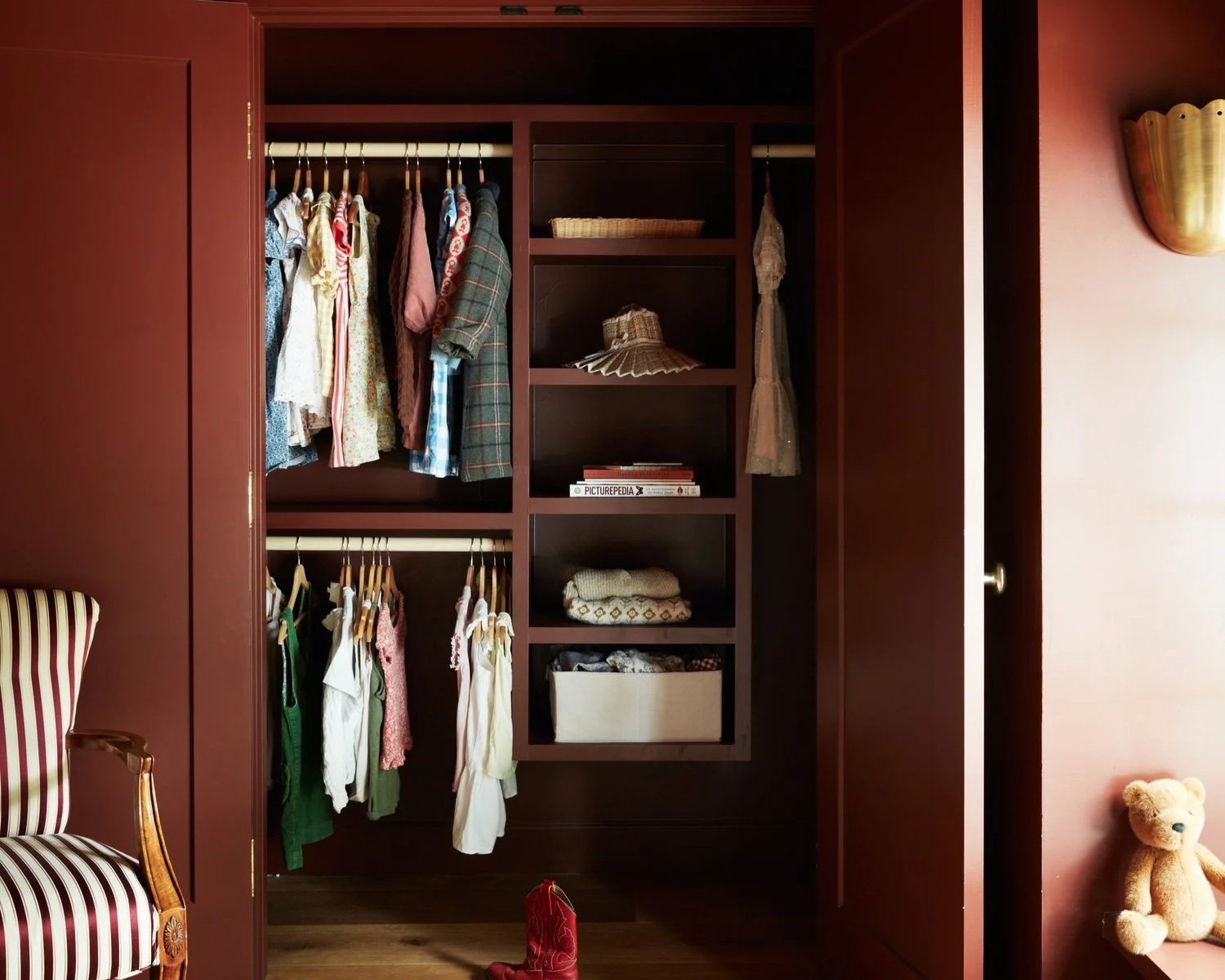
This segment is the second of a three-week series exploring post-holiday organization. In addition to tackling general clutter and refreshing your home for a fresh start in the new year, post-holiday organization involves storing and putting away holiday decor (Week 1), incorporating new gifts that were received over the holidays (Week 2), and cleaning out and re-setting the refrigerator (Week 3).
With the influx of gifts that are received around the holidays and coupled with the inspirational energy that the new year brings, this is a great time of year to get organized in your home. Today, we’re focusing on how to organize new gifts into your home.
When we talk about making space for new gifts, we’re talking about two phases that come together to create organization: the first is decluttering/editing ,and the second is creating the storage solutions and organizing systems themselves. Getting organized can feel like a big, daunting task but it can be broken up into small, manageable action steps. Just like we touched on in Week 1, the first phase of going through all of your belongings and decluttering (that will provide you with your keeps, donates and discards) is just as important as the second phase of creating the systems and storage solutions themselves. That’s because there’s no magic organizational system that can combat drawers or cabinets bursting at the seams, and the truth is that we all have too much.
In order to properly declutter in phase one, you must touch every item and make a decision on it; push past the resistance and avoid delaying it for later. We know it can be hard to get rid of things, but when you hold onto items that you don’t like or use, you are perpetuating clutter, and when you multiply that single item by an entire household…. You see where we’re going with this. At the end of the day it will cost more energy to look at something and know you should be doing something with it, than to just take action in the first place. Decluttering is a process that is meant to help you live more intentionally in your home. The idea here is not to carelessly or thoughtlessly get rid of things just for the sake of it, to only to fill that space again. Decluttering’s purpose is to create space in your home, and the process is intended to show you and help you to live with less; and to purchase with intention moving forward.
The Closet
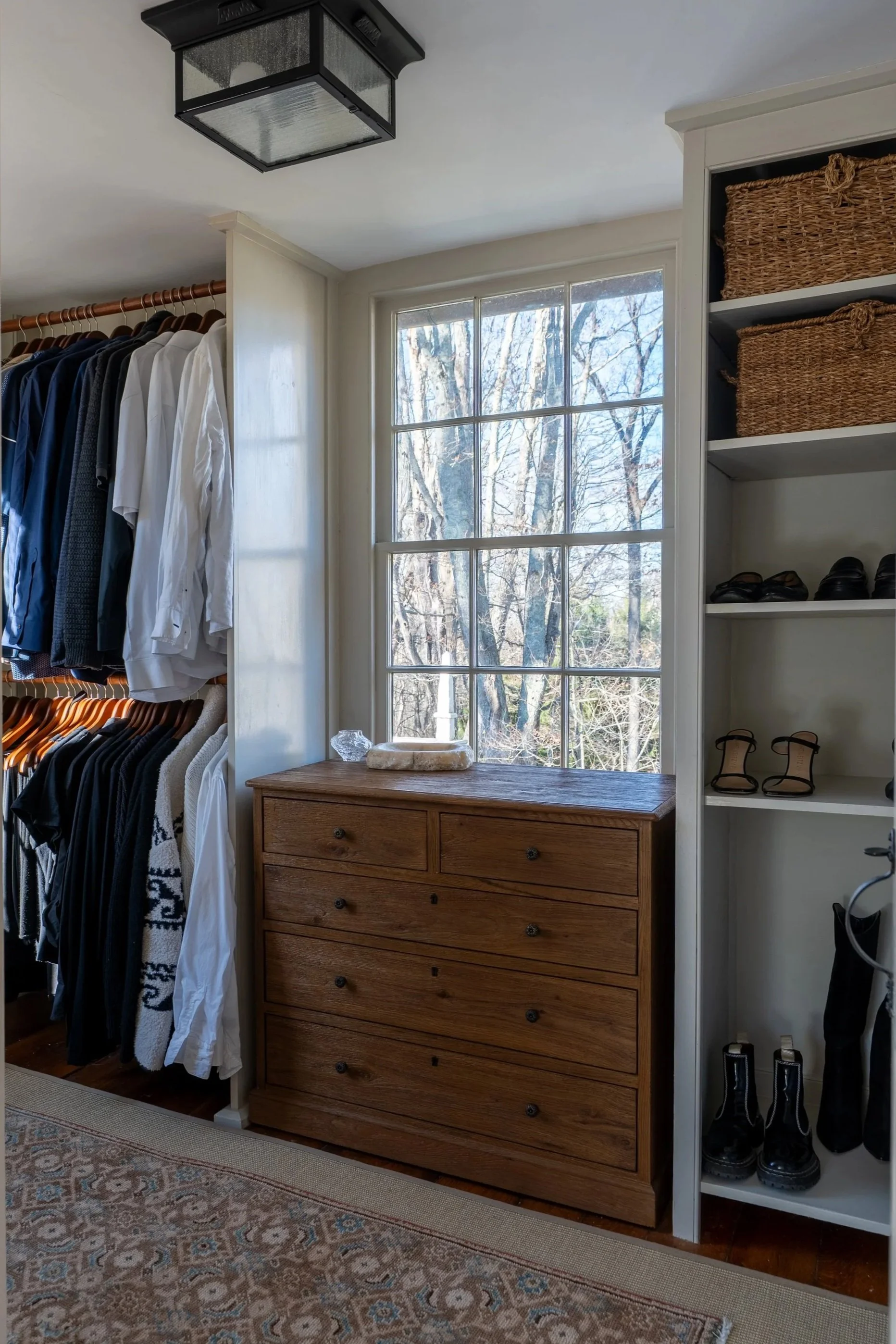
Our closets often get fresh additions after the holidays, with clothes and accessories being some of the most commonly gifted items. Whether you've got a big, roomy walk-in, a makeshift corner in a studio apartment, or somewhere in-between, your closet should be something you like to look at. It should be organized, well-lit, and a representation of yourself.
Decluttering & Editing
Our closets often get fresh additions after the holidays, with clothes and accessories being some of the most commonly gifted items. Start with decluttering/editing your easiest category (it could be belts or t-shirts); make your way through the category and build momentum from there. Once done with your first, you’ll move onto your next category and then the next until you’ve decluttered your entire closet.
Many clients can be sentimental about their things and we are very aware that parting with them can be an emotional process. Clothing holds emotional value. But closets are valuable real estate with a finite amount of space — don't waste this space with clothes you don't wear, you don’t like it, don’t fit you, or are in need of mending/repair and cannot be easily done so. Instead, keep the clothes in your closet that you like, wear, fit you and make you feel good.
As you go through your closet, you'll start to see your blindspots and weaknesses. For instance, do you have an irrational fear of running out of winter coats and cocktail dresses, but don't wear either very often? See where you're a repeat offender, and if this makes sense with your lifestyle. Analyze your normal day-to-day and how you need to dress for it. Make a mental pie chart (or physical one if you're Type A like us), breaking it up into work, exercise, casual, dress-up, vacation, etc. That should be your guide in terms of how balanced your closet should be. When was the last time you went to a black tie function? Never? Then you probably don't need multiple gowns that kind-of fit. Narrow it down to the most classic one that you truly love, as a just-in-case. Are you more of a pants and jeans person than skirts and dresses? Time to stop hoarding wool tights.
We all have those items in our closet that we haven't been able to part with because they were too expensive. Somehow, we think that by holding on to it (sometimes with tags intact) we can justify the purchase even though we’re not using it or even like it. And the constant reminder from your closet that you wasted good money isn't that helpful. Instead, come to terms with a bad choice, and use it as a learning opportunity to be more thoughtful when it comes to making a purchase.
We also all hold onto items that don't quite fit anymore, and probably haven't fit for awhile, holding on to the vague reassurance that maybe they'll fit again some day. One of the most commonly asked questions I get asked when editing and organizing a closet is what to do with the clothes that don’t fit. Here’s the thing: Many women have three sizes of clothing in their closet – clothes that are too big, clothes that are too small, and the items that actually fit. Clothes that are too big perpetuate the idea that you may not succeed in your health goals and you need these items in case you fail. Boo to that idea. Let’s focus on succeeding, shall we? Furthermore, I have yet to meet a woman who actually feels excited and motivated by clothing that’s too small. Hanging onto these clothes generally does nothing more than help trigger negative thoughts about yourself and the idea that you should be different than you are right now. So many women are waiting to be their ‘ideal size’ to begin living their best lives. Opening a closet stocked with clothing that doesn’t fit reinforces that destructive pattern of behavior. No thanks. When you make the decision to clear out items that don’t fit from your closet and wear clothes that fit and flatter the body you have, you are making a statement – you are embracing yourself and your current body and treating it with the respect it deserves. Let’s start sending ourselves the message that we deserve to be treated with love and acceptance no matter what body size we are today.
Once you've completed your decluttering and editing, find ways for your clothing to be useful to others: you can sell valuable items online on sites like Poshmark, or bring them to your local consignment shop. You can also offer items to friends or family, or simply donate them.
Systems & Storage Solutions
Whether you've got a big, roomy walk-in, a makeshift corner in a studio apartment, or somewhere in-between, your closet should be something you like to look at. It should be organized, well-lit, and a representation of yourself.
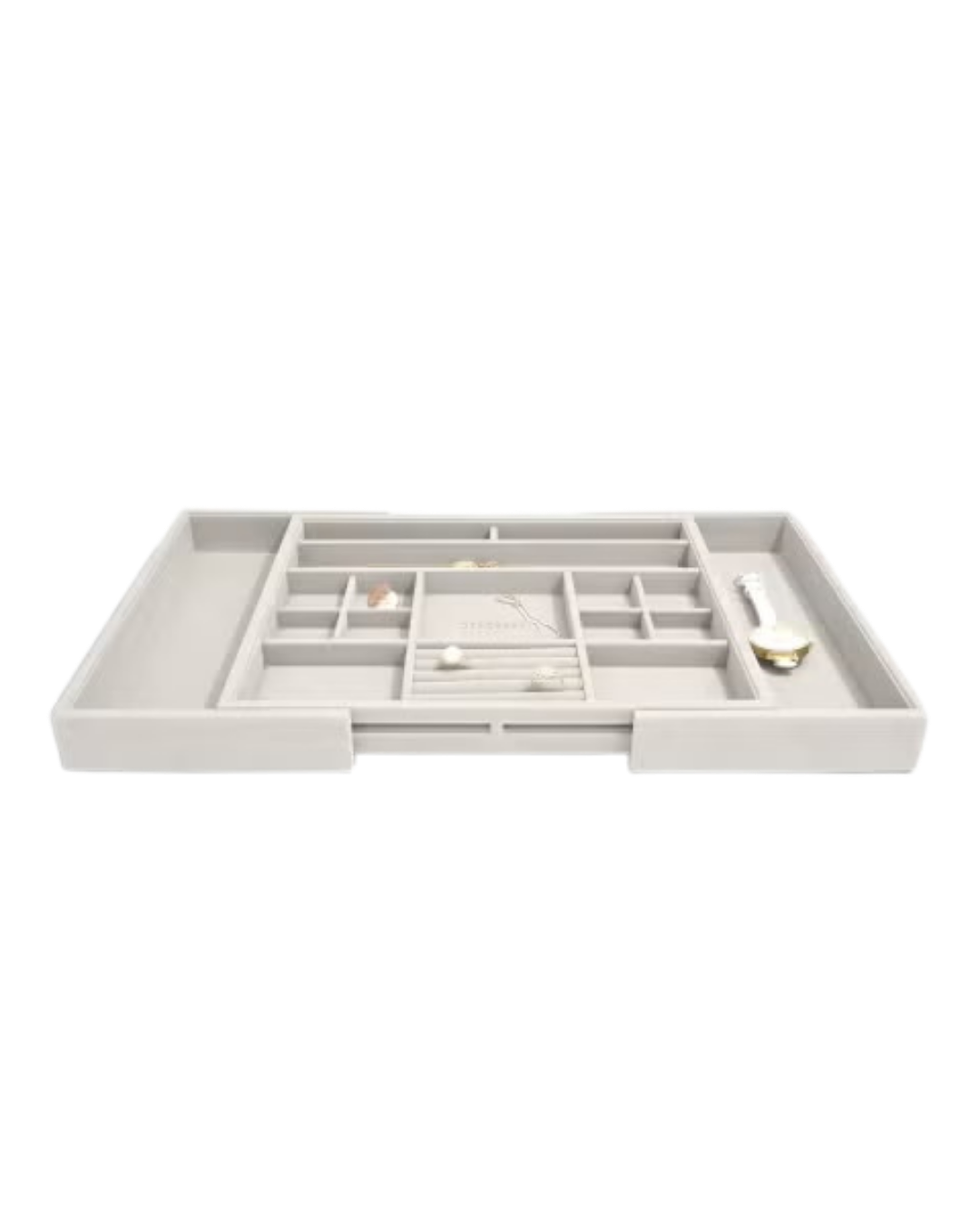
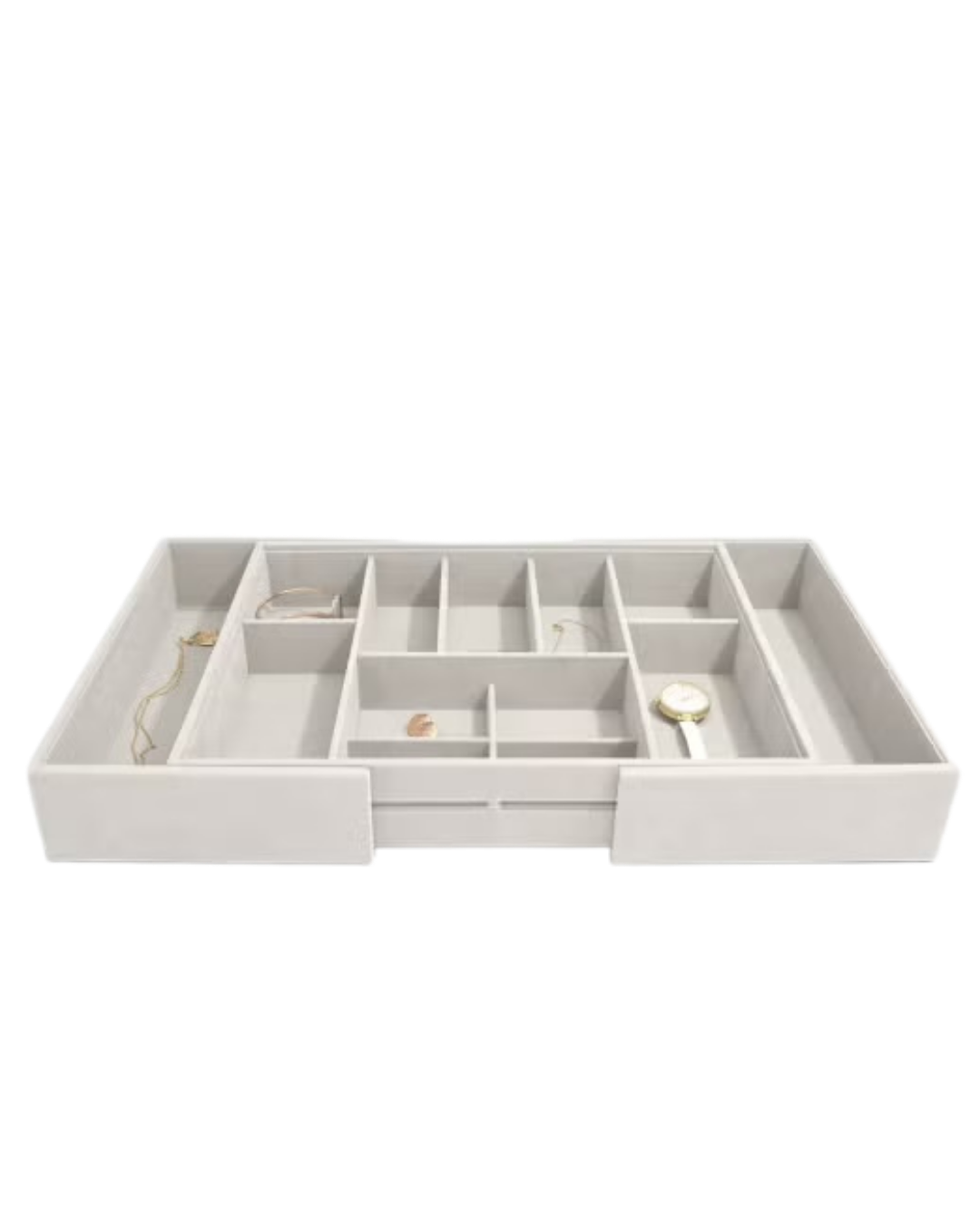
When it’s time to create systems and storage solutions for your closet, you’ll reset the space by creating zones. The zones represent the categories that you just decluttered/edited. Make sure you are keeping categories in the same zone of your closet, like all blouses together and all sweaters together. This makes finding what you need and putting things away much easier. This will give you a true glimpse into what all you own and help you shop your closet with ease.
A simple yet daunting principle to keep in mind is that if you want to be organized, you have to work within the physical boundaries of the space. That means that if you are at capacity on hanging storage and you want to add something to your closet, you might need to take one out.
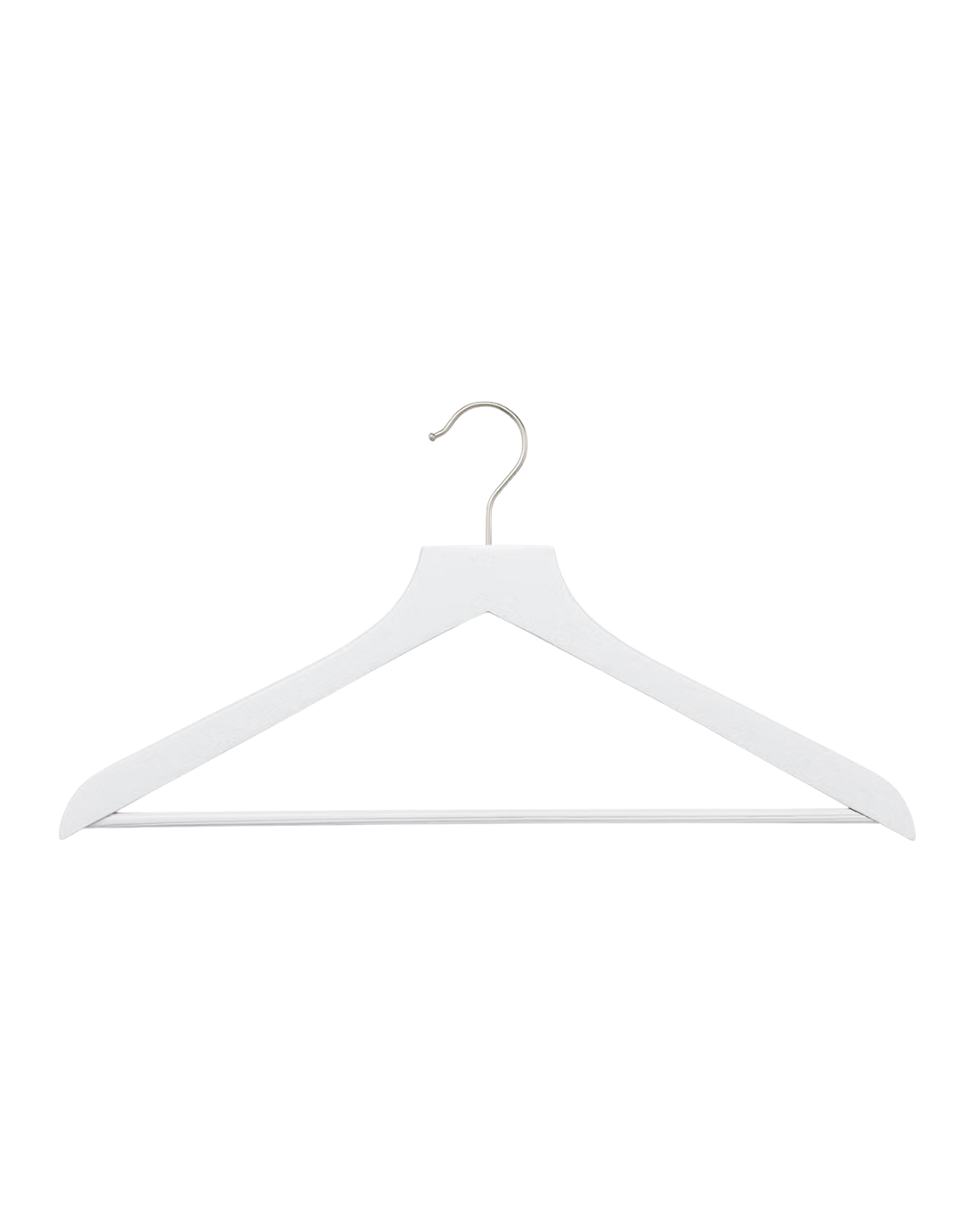
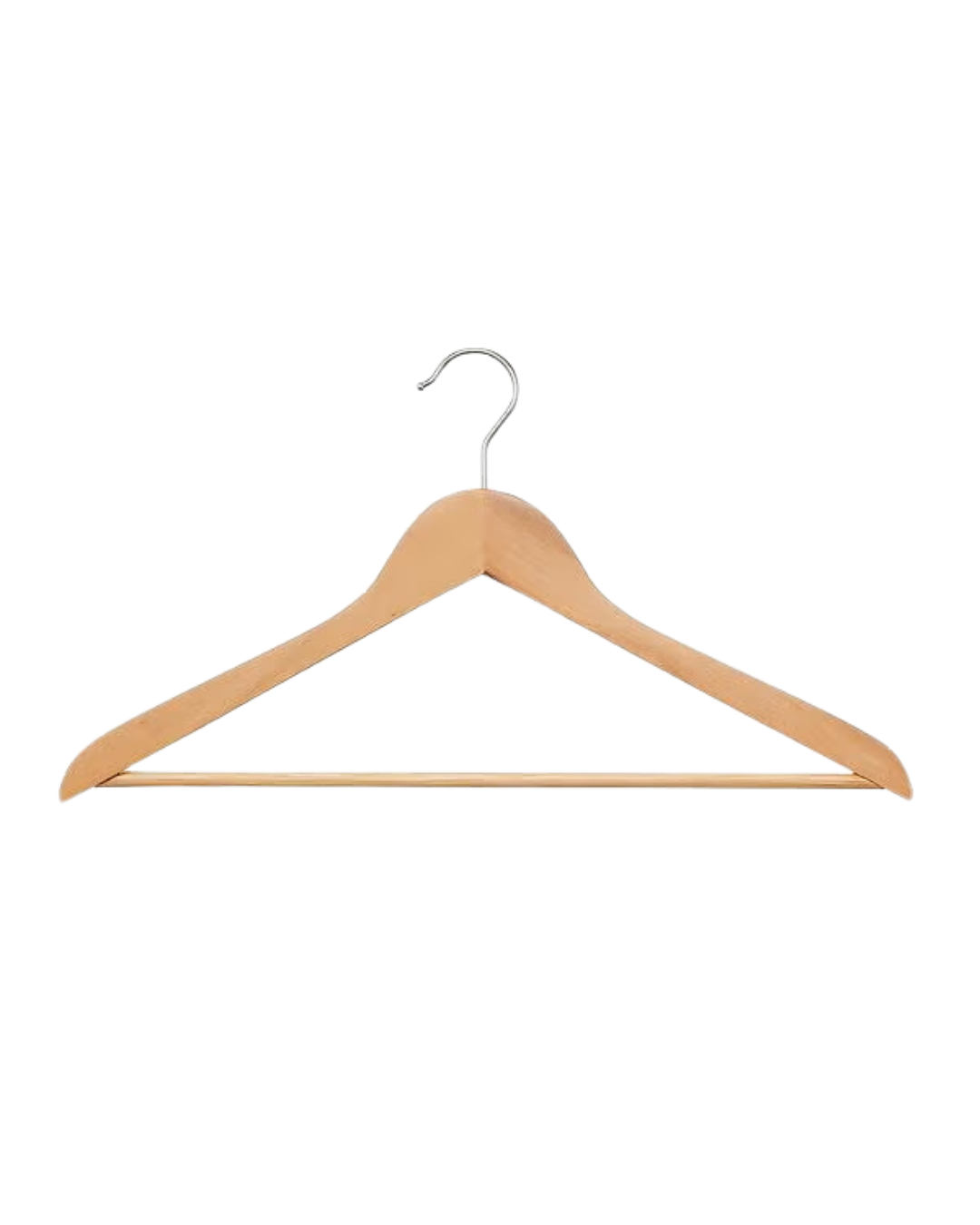
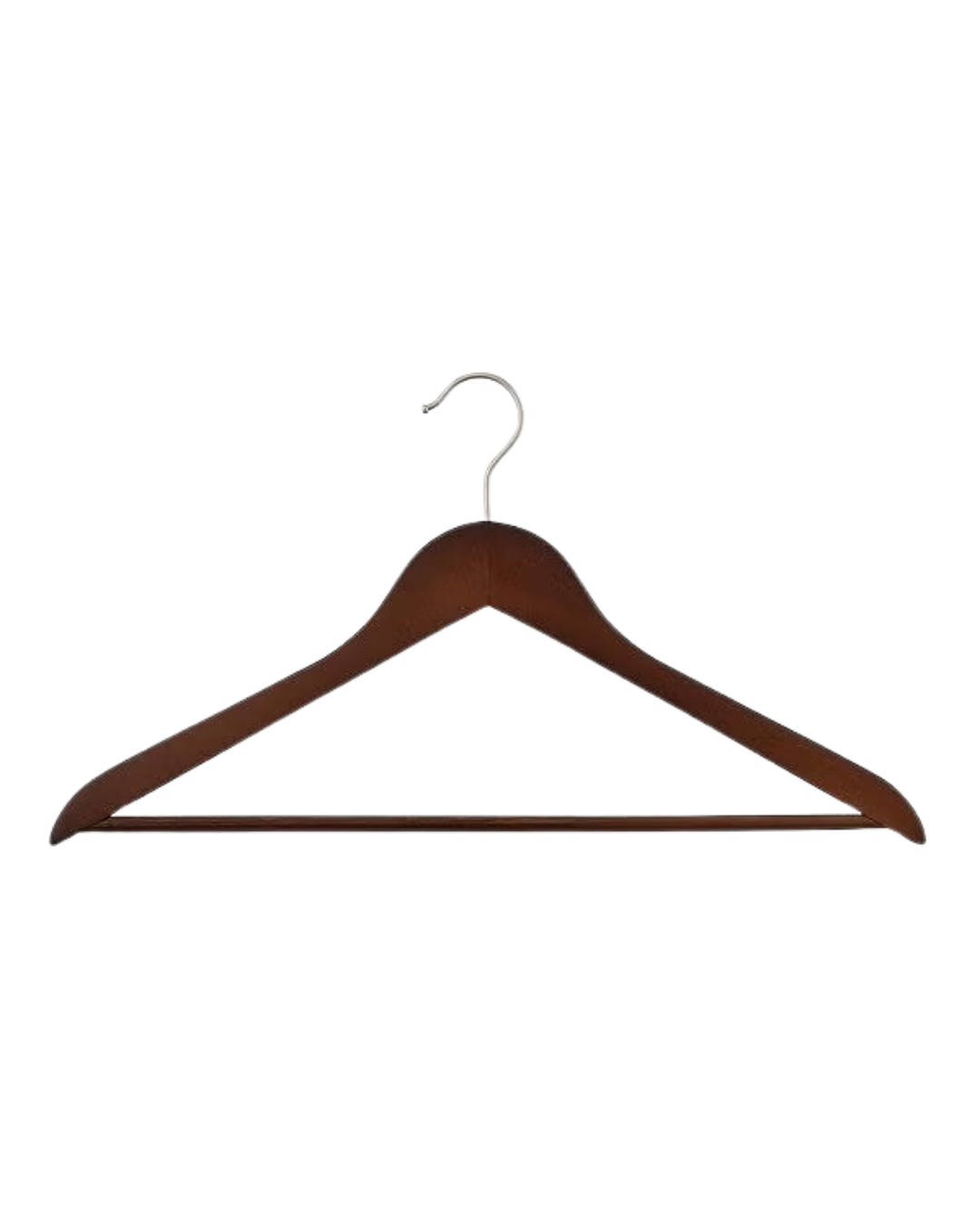
We suggest swapping out your hangers! Investing in matching hangers is one of the best ways to make a visual impact on your space.
Shop Closet Storage
Kids’ Spaces
The good news about organization is that when done right, it allows for flexibility and room to evolve, which often is most evident in a kids’ space.
The key to long-term success in any organizational system is making sure that you leave space for growth. If there’s one constant in life, it’s change. Just because a particular system suits your needs perfectly now doesn’t mean it will always be what you need. Incorporating your new holiday gift items may serve as a perfect reminder of this. Remember, this is why it’s more important to think about making progress than achieving perfection as you organize. By allowing space for change to occur, your systems will be maintainable and functional as life goes on. Life happens and things can change, so your organizational systems don’t have to be set in stone. They should be able to reflect the life you’re leading at present! Organization can always be adjusted and transformed to suit your life, and incorporating new items into existing organizational systems is a great way to utilize the organization you have in place, while keeping it current and functional for you!
Decluttering/Editing
If you didn’t have a chance to already edit the kids' toys before the holidays, take this time to do so. If you’re feeling really overwhelmed, start by editing one category - whether that’s stuffed animals, cars, or dolls. Set aside any toys in that category that are broken, missing pieces, no longer age-appropriate, or no longer played with to either be discarded or donated. Once you get one category under your belt, you’ll often feel inspired to tackle more.
Once you’ve gone through a deep decluttering process, we suggest editing before, holidays, and any other occasions where you experience an influx of toys and new belongings.
When organizing kids’ spaces, sometimes there just isn’t room for everything. And the more toys and things that kids have, the more overwhelmed your kids can get. Our recommendation is to stick to the spaces you’ve dedicated for storage, and if their things are growing beyond that, take that as a cue begin clearing out pieces they no longer use. Rather than continuing to add to the room, it’s helpful to pare back and keep only the things that they like and use. You can also rotate in toys to help alleviate the space and to keep things interesting for your kids, too.
We think it’s important to get your children involved in the process of decluttering and organizing. You are giving them the opportunity to maintain ownership of the process, while still being able to get the results you’re looking for. We feel this type of activity is a valuable life skill that they’ll be able to fine tune as they get older each year and with regular practice. It teaches kids intentionality. Naturally most children are glorified hoarders, but don’t get discouraged if there is initial push back during the decluttering process. We have found that providing them freedom with clear boundaries can help guide the process. For instance, “You have 13 stuffed animals, pick out your favorite 10”. Also, we’ve found that sharing where their items will be going (i.e. to someone else who may not have any stuffed animals, and not simply thrown in the trash) may help bring some encouragement to the process. We never recommend throwing away something secretively, or forcing your child to get rid of something, as that will turn them away from the process and work against you long-term.
Systems & Storage Solutions
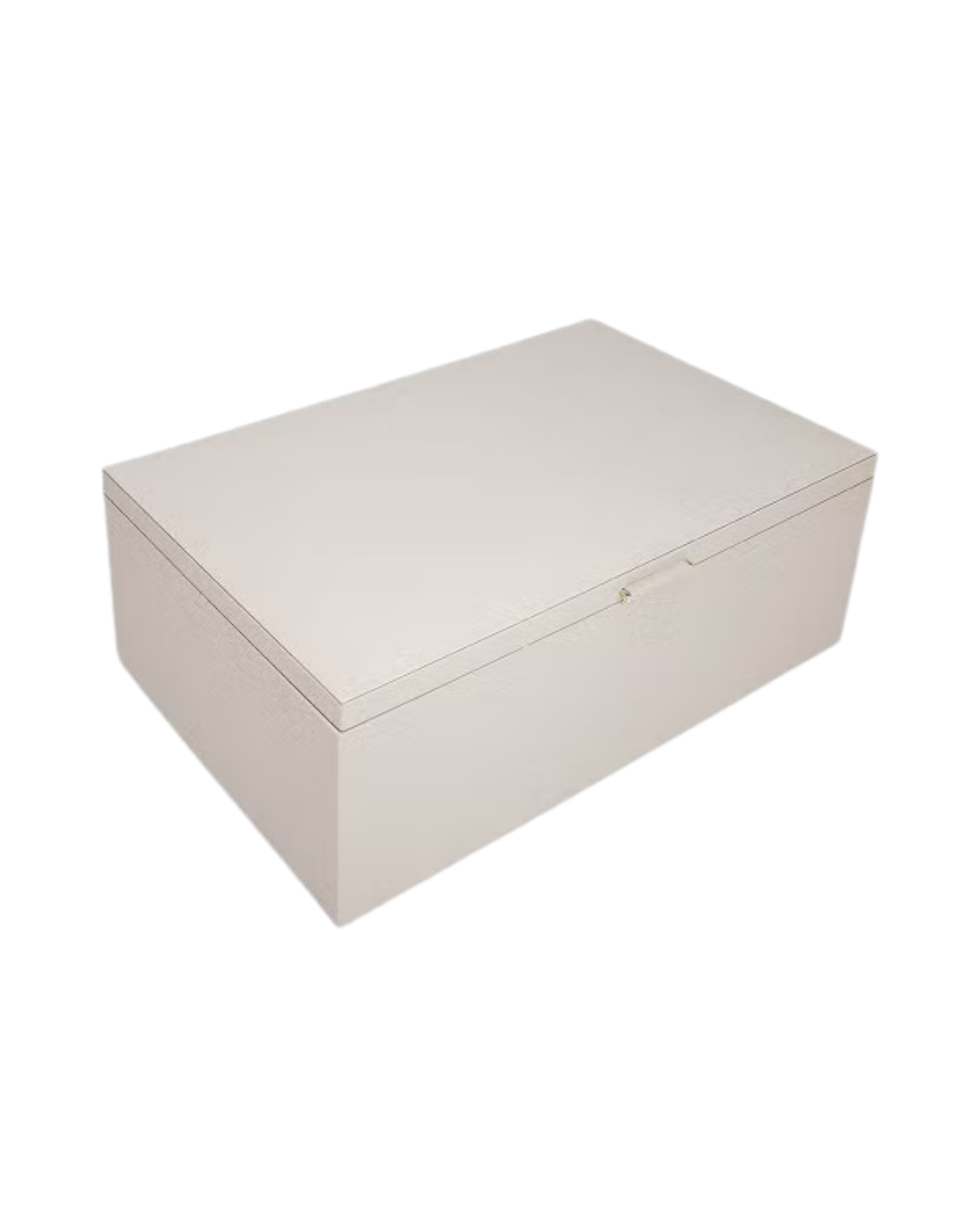
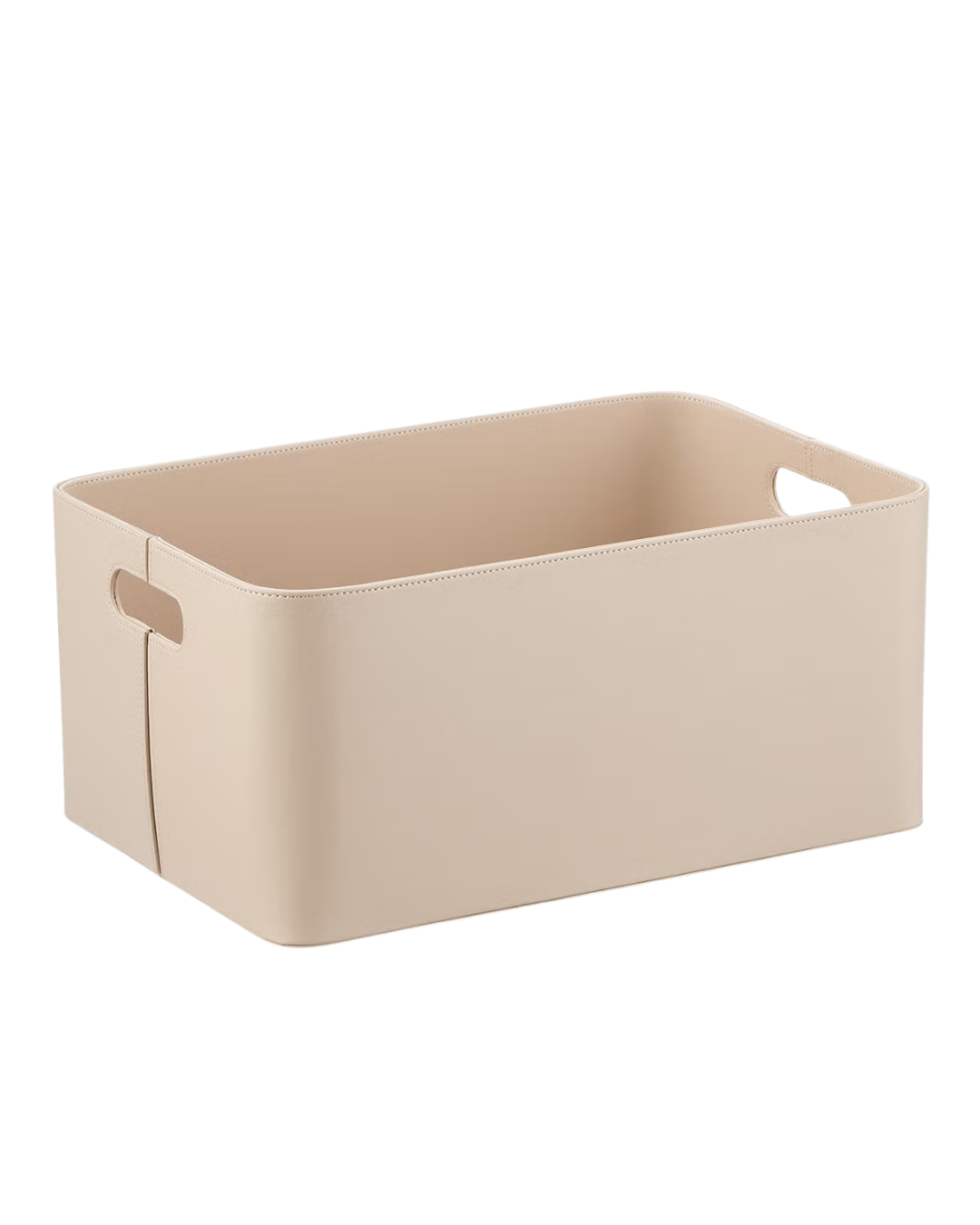
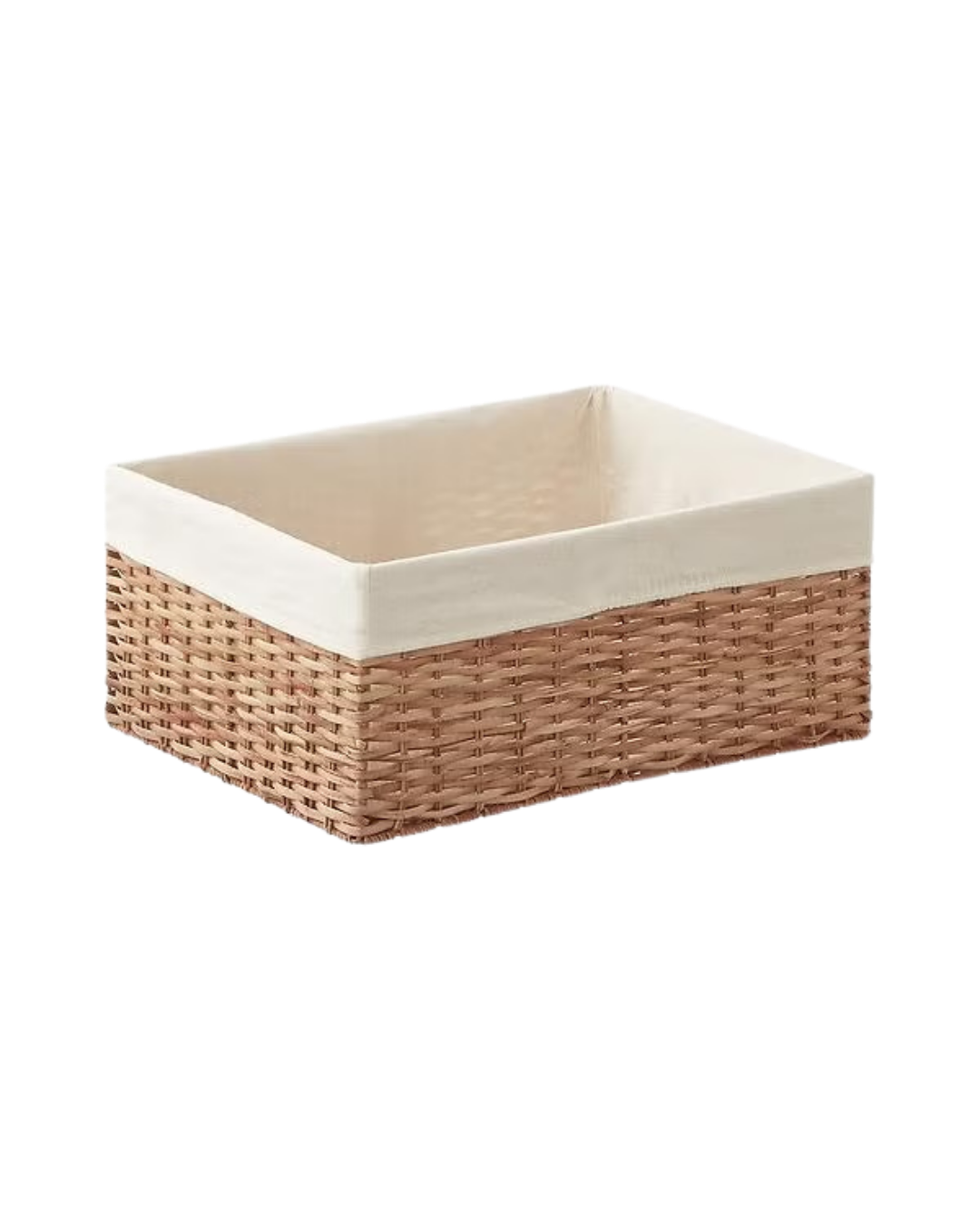
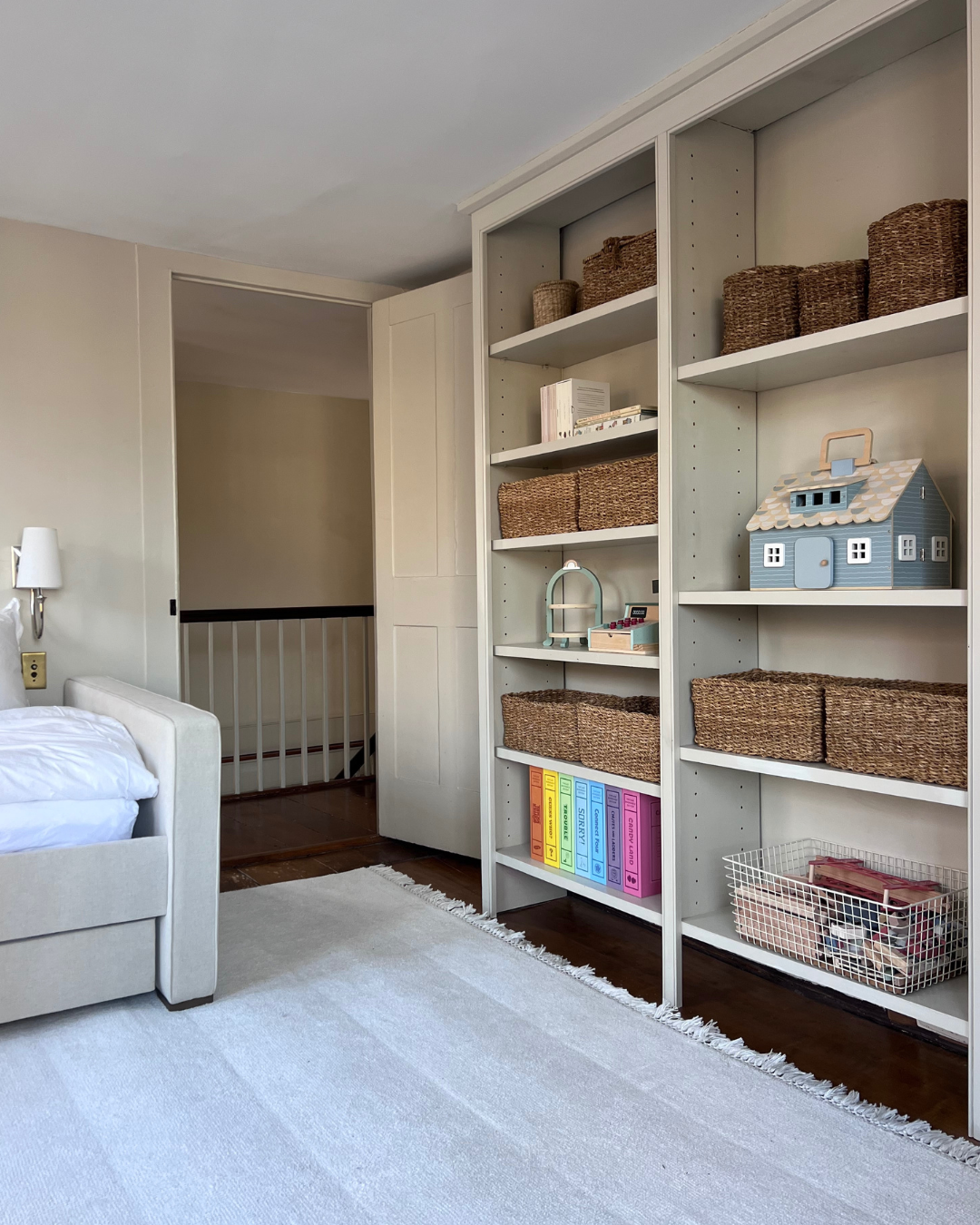
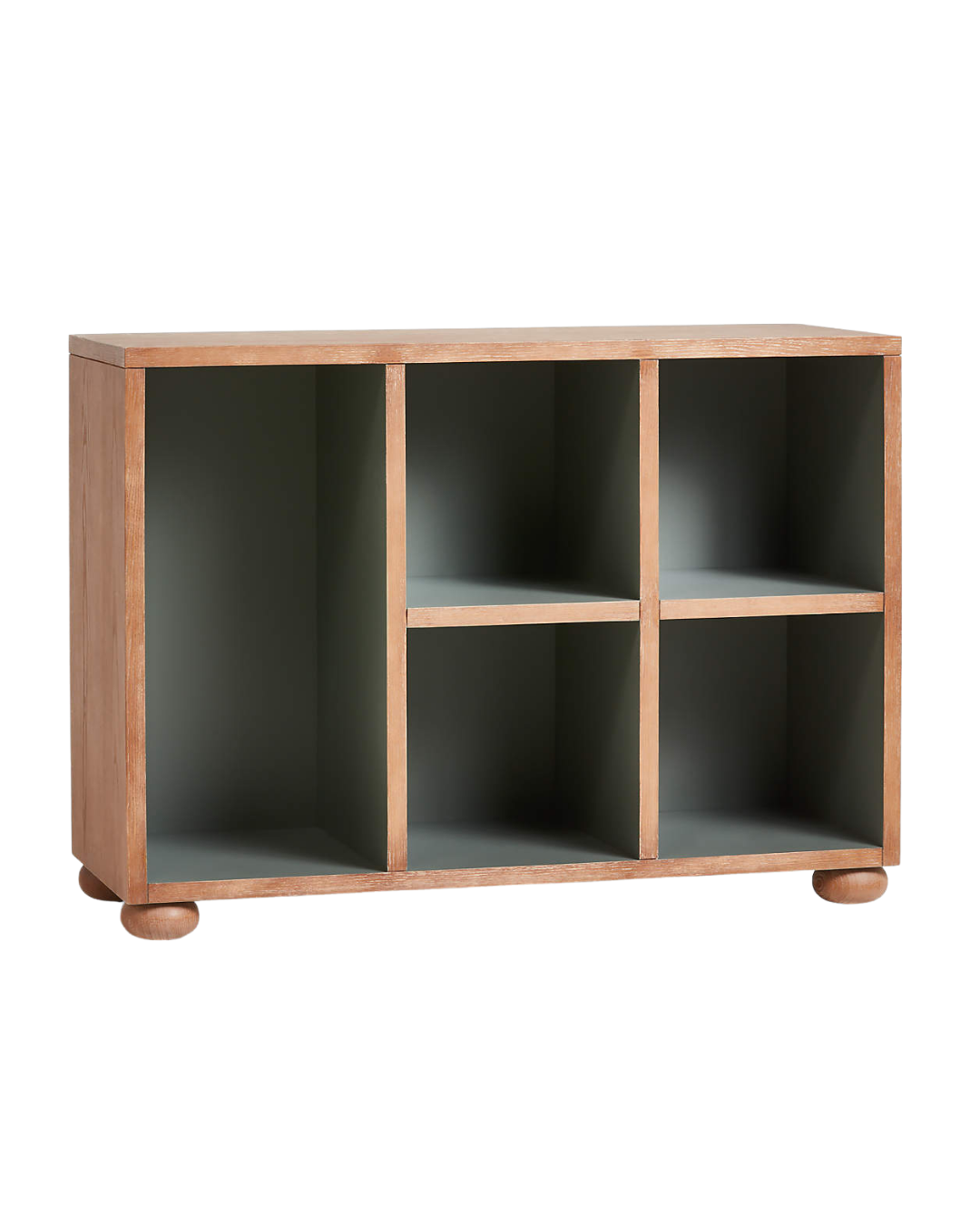
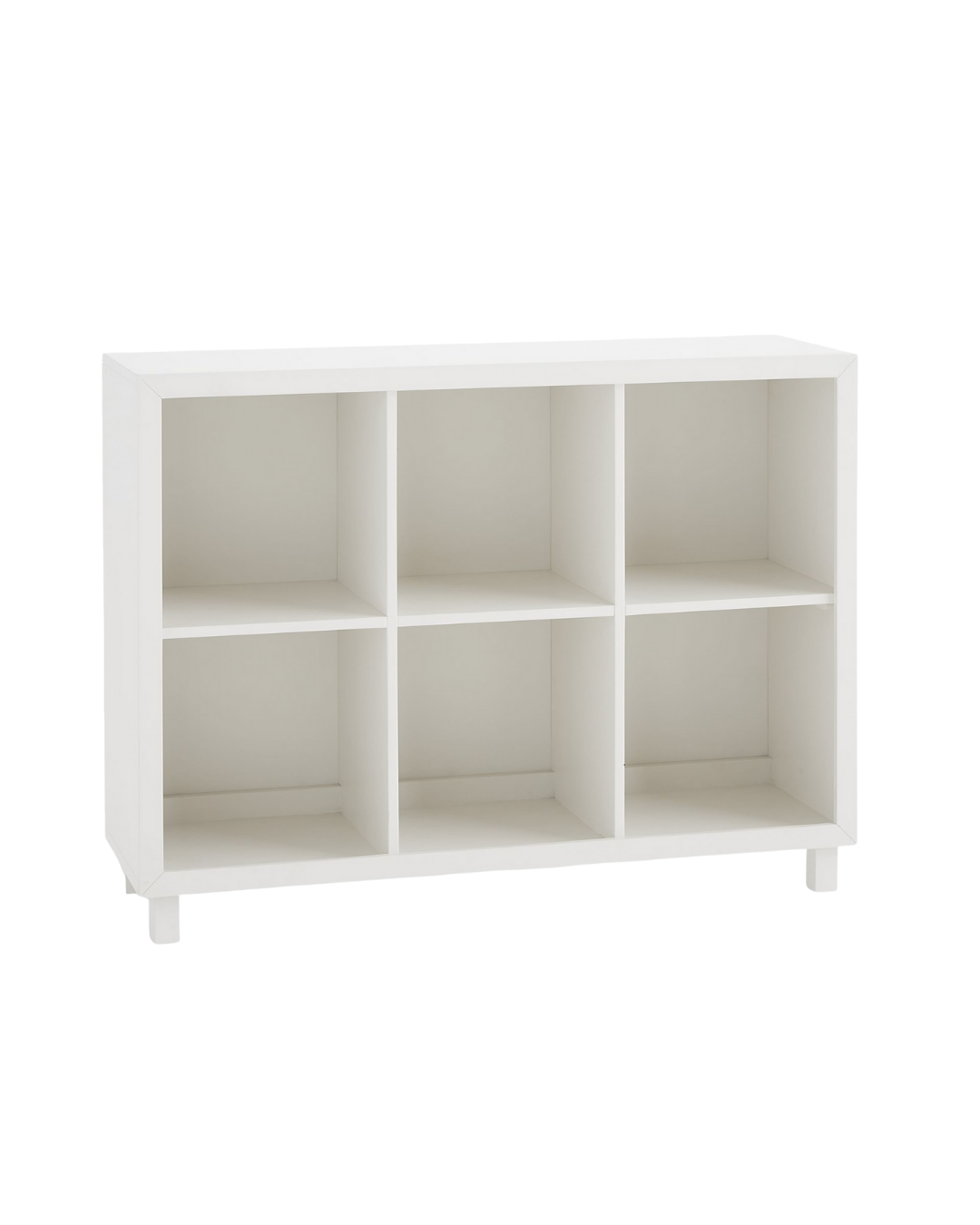
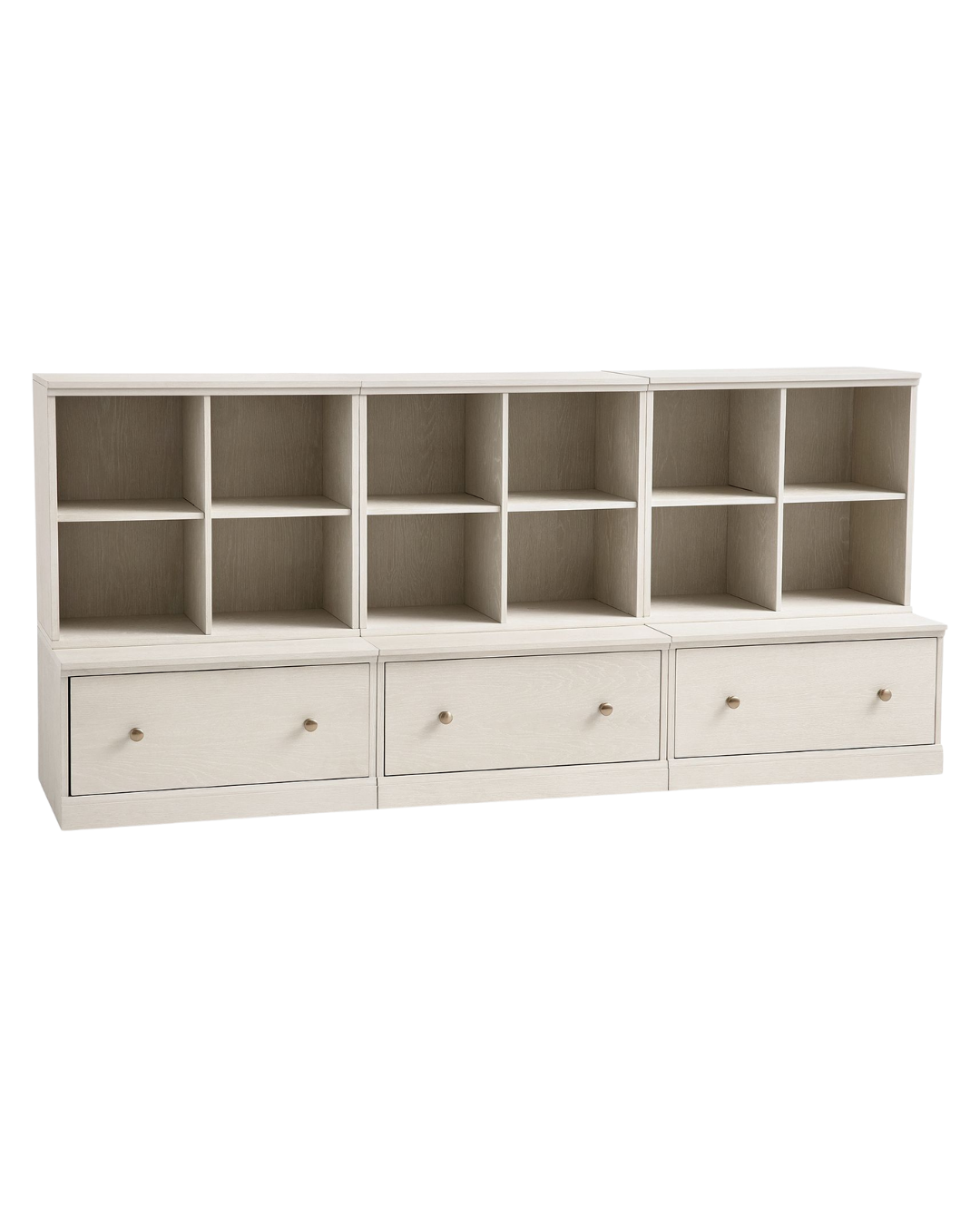
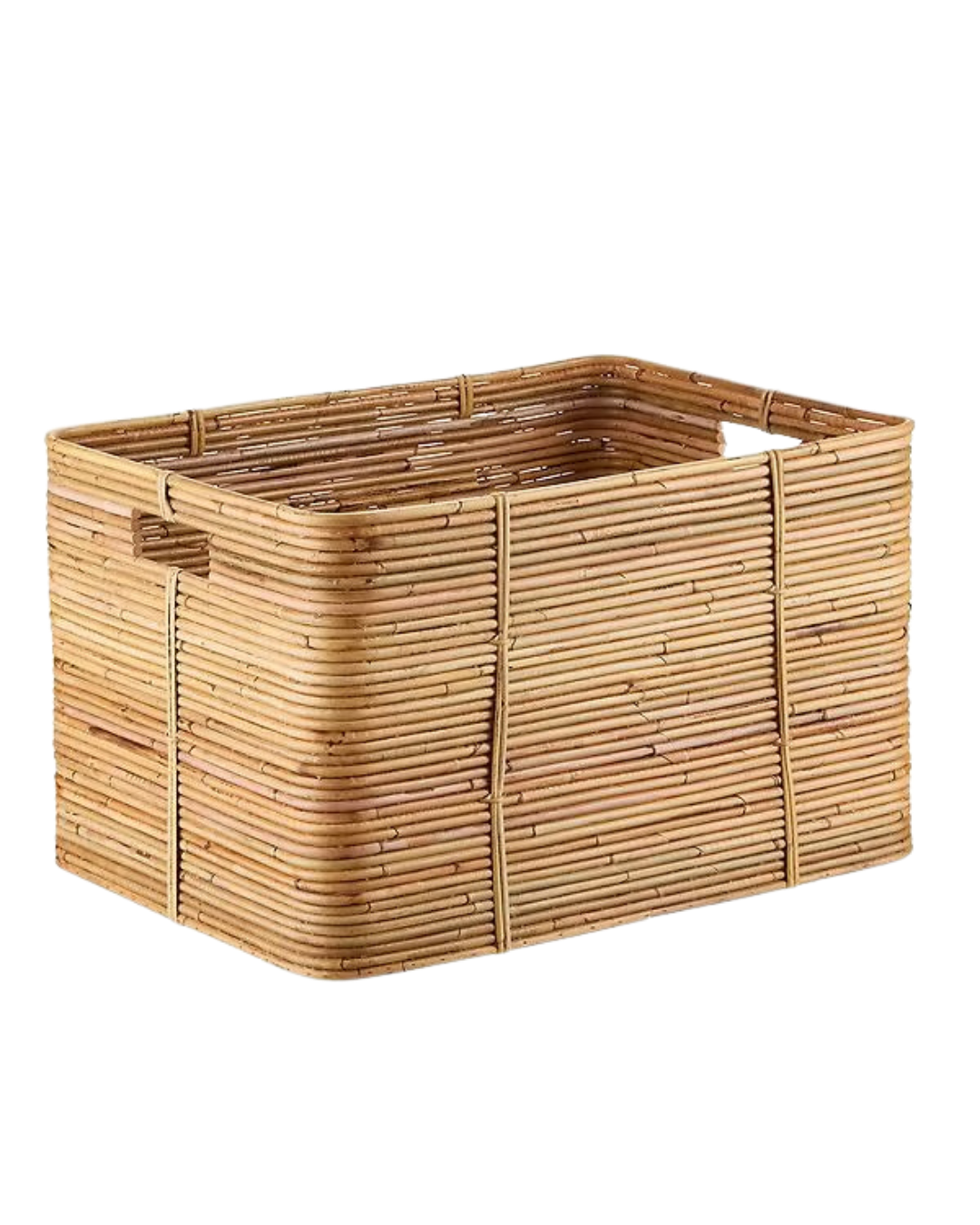
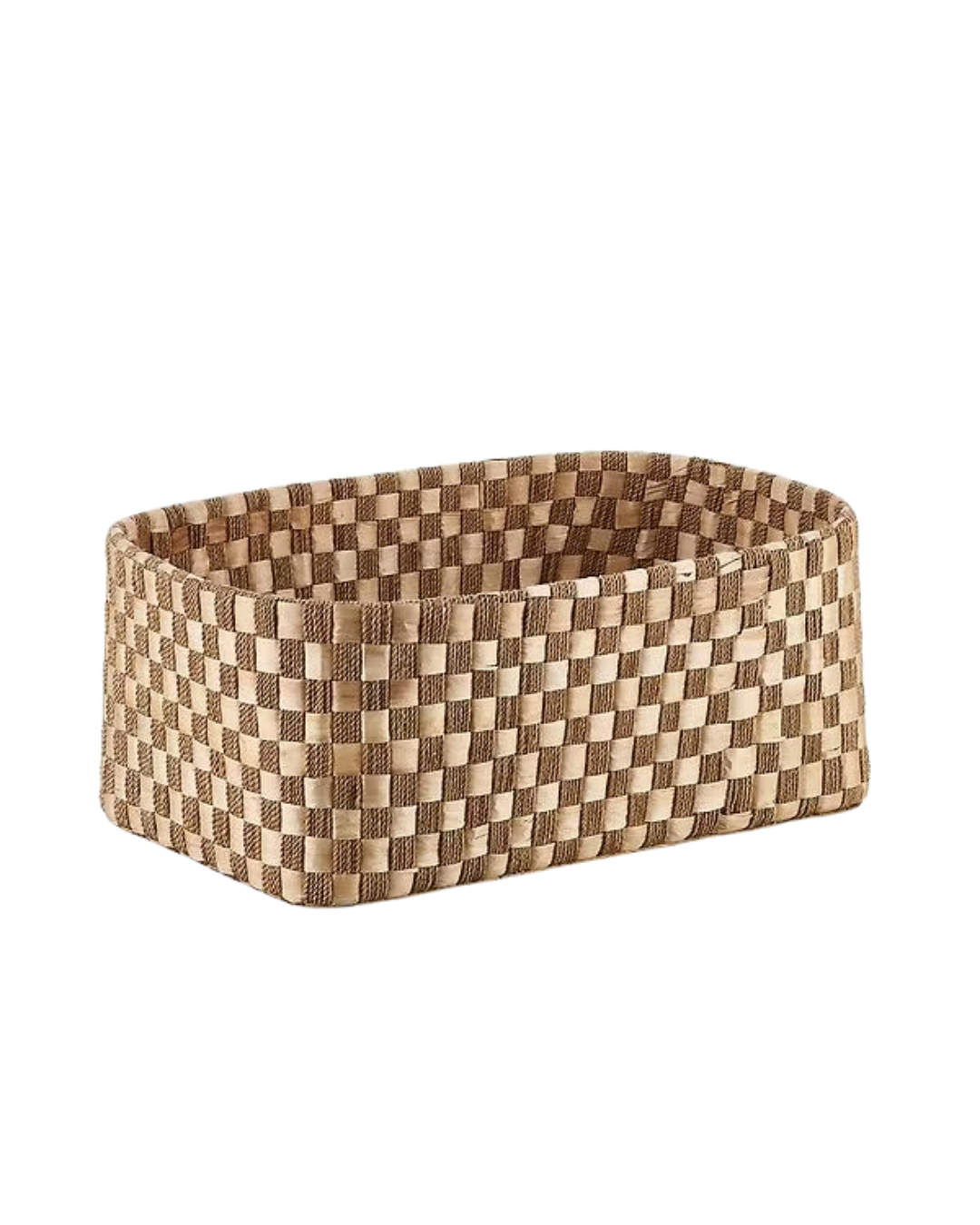
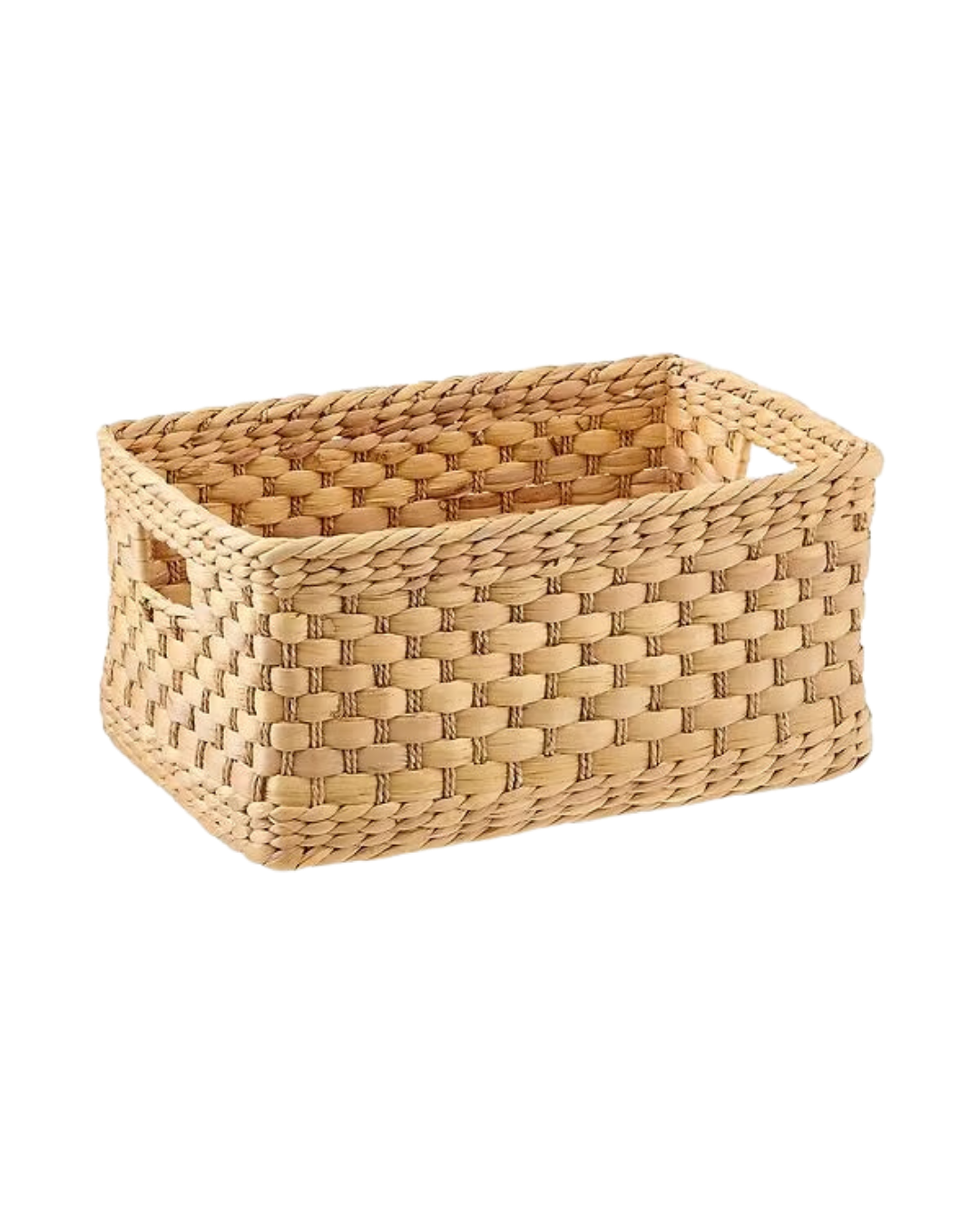
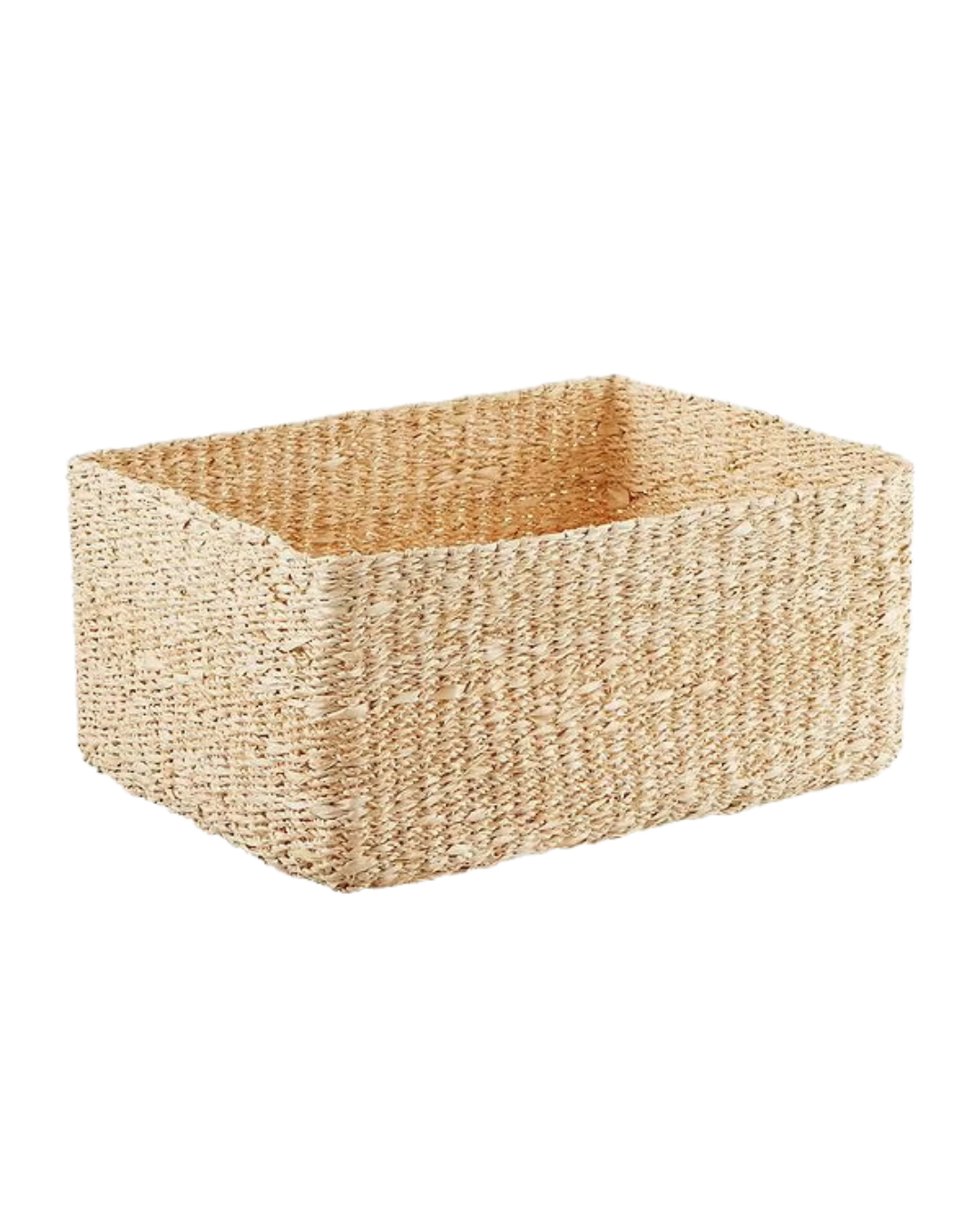
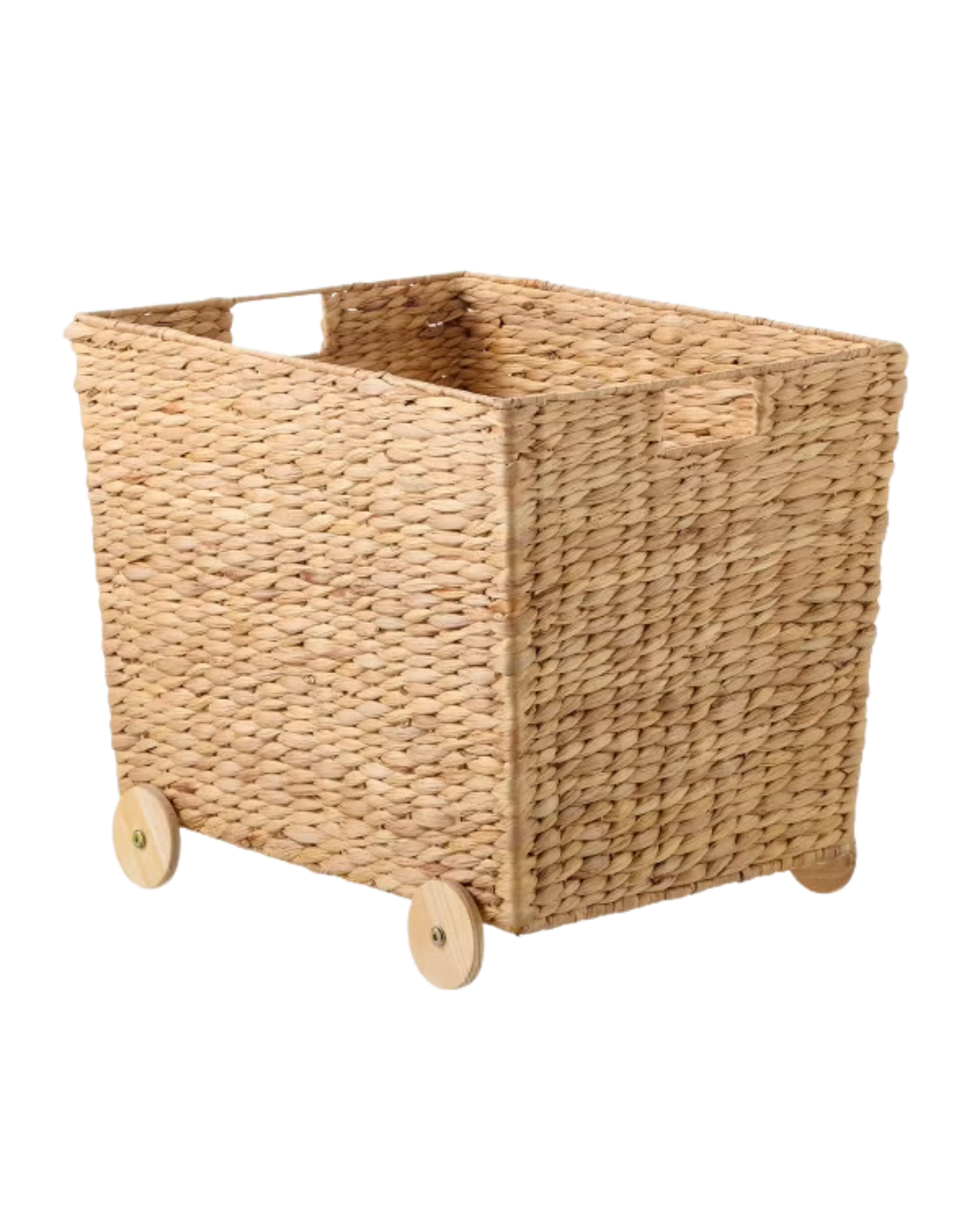
Our go-to solution for storing toys and books is a cubby system or open bookshelf that can accommodate open bins. Embrace built-ins and bookshelves, too!
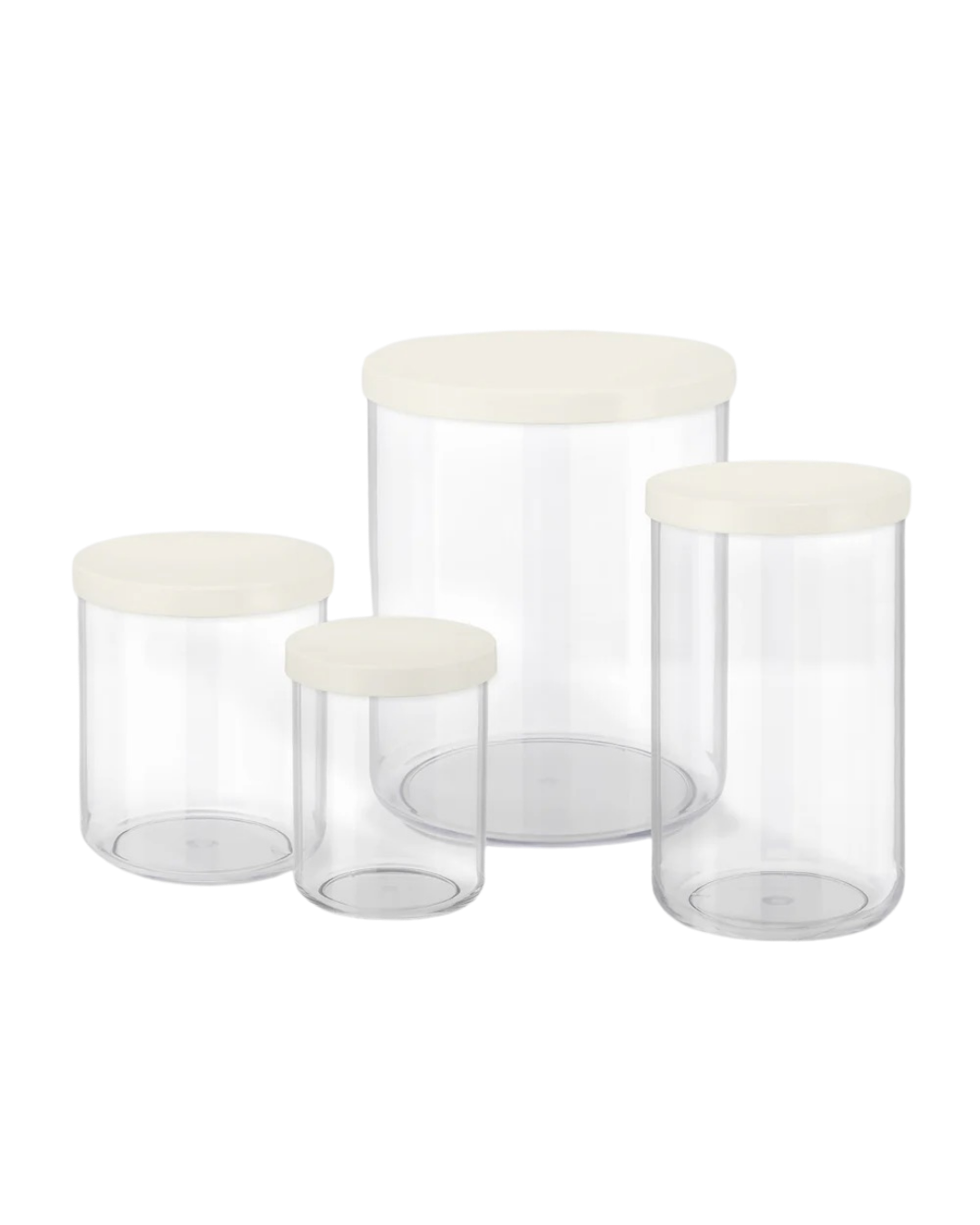
Open bins & baskets make a huge difference in any space, but kids will struggle to put toys away correctly if bins are out-of-reach or overstuffed. Keep bins as low as possible and loosely filled to encourage clean-up. We also love canisters as a functional and elevated way to display arts & craft supplies.
We always recommend labeling to act as a gentle set of instructions. Broad categories will help with storage flexibility and are the key to a well-organized and functioning playroom that will grow with your child over time. For example, instead of having one bin for “trucks” and another for “trains”, we suggest having one bin labeled “wheels”; and instead of having one bin for “people” and another for “animals”, we suggest having one bin labeled “friends”. That way, your system can remain intact regardless of what small toy comes home from the next birthday party. Early readers may also benefit from simple images next to the category name. This not only helps them identify where each toy belongs, but they’ll learn the words too!
We always remind clients that regardless of whether or not your child’s space is organized, it will (and should) get messy— it’s an important part of their development. The key is having a simple storage system in place that is easy to reset at the end of each day.
Shop Kids’ Storage
Lastly, it’s important to note that gifts serve their purpose the moment they are given to you. It’s up to you to decide if it fits in your life or not, and you don’t need to feel guilty about it. The giver of the gift wants you to be happy! We often find items tucked away in closets and under beds because people didn’t know what to do with the gift they didn’t want. It becomes a postponed decision, and collects more and more clutter. Avoid this pile up if you know right away that you don’t like or will never use something!
Receiving a gift you know you'll likely never use prompts many of us to hold onto the item out of guilt. Sometimes, it will be years before we finally let go of it (both the gift and the guilt). While it may be necessary to hold onto some items, others can be donated or regifted right away. If you regift an item, do so in a thoughtful way that won't hurt anyone's feelings—which generally means making sure it goes to someone else who will love it, and probably doesn't run in the same circles as the person who gave you the gift. After all, it's truly the thought that counts: You can be grateful for the gift without holding onto it.
Thank you to Story Reporter Taylor Knight, Photographer Alex, In-Studio Anchors Scot Haney and Caitlin Francis, Executive Producer Becky McCabe, and the entire Great Day at 9A team!